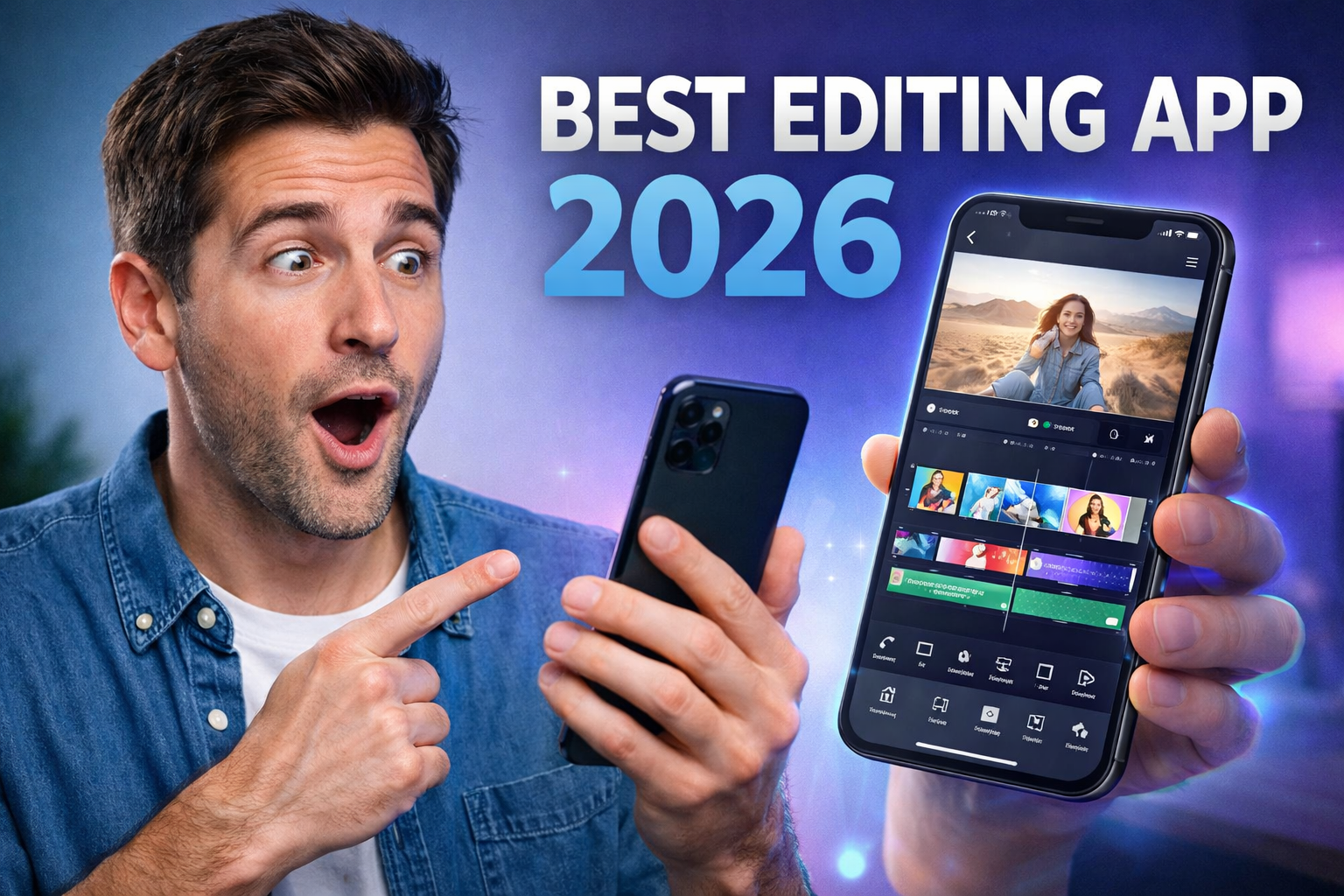
Hello friends, today we are going to look at something very practical, how to pick the best video editing app in 2026 without wasting weeks testing random downloads. Many creators feel stuck between complicated desktop editors and limited phone apps, and it is easy to install the wrong tool and then blame yourself for bad results.
This guide will walk you through the leading mobile editors in 2026, how they differ, and what actually matters for YouTube, Instagram Reels, and TikTok content. Instead of a long list of random apps, you will get a short set of realistic options, a comparison table, and setup tips that match how people really shoot and post today.
The article is useful if you record with a phone, a small mirrorless camera, or both, and you want to cut, color correct, and add subtitles without a full desktop workflow. It covers creators, students, small business owners, and anyone who just wants better looking clips of travel, products, or daily life without learning a full movie editor.

You will see which app is best for quick social clips, which one is closer to desktop level editing, and which free option is strongest if you do not want a paid subscription yet. Where features depend on device model or region, you will see clear notes so you can decide safely before linking a card or uploading personal footage.
Related Resource
The Download Now button above opens the file page related to Best Video Editing App On 2026. It is placed here so you can access the mentioned resource directly from the article.
What the best video editing app in 2026 should really do
Marketing pages talk about AI and templates, but a good editor in 2026 still needs a few boring basics to be worth your time. When comparing apps, check these first instead of getting distracted by flashy effects.
- Reliable timeline with multiple video and audio tracks
- Clean export with no heavy watermark or aggressive compression
- Stable 4K editing on your actual device, not just on the spec sheet
- Fast text and subtitle workflow, ideally auto captions with manual fixes
- Simple audio control, ducking music under voice and noise reduction
- Easy aspect ratio switch for horizontal, vertical, and square formats
If an app looks cool but keeps crashing with three layers and some color grading, it is not the best choice for serious posting, even if reviews praise the design. Stability and export quality still matter more than any single AI feature.
Quick comparison of leading video editors in 2026
Below is a simplified comparison based on current public features. Exact options can vary by Android version, iOS version, region, and your hardware, so always double check the latest app notes before paying.
| App | Platforms | Best for | Key strengths | Main drawbacks | Typical pricing |
|---|---|---|---|---|---|
| CapCut | Android, iOS, desktop | Short vertical clips and trends | Fast templates, strong auto captions, TikTok friendly tools | Heavy online features, data and privacy questions for some users | Free with optional paid assets |
| VN Video Editor | Android, iOS, desktop | Free multi track editing | No watermark, solid timeline, good for beginners and intermediates | Fewer advanced color and audio tools than pro apps | Mostly free, limited paid extras |
| LumaFusion | iOS, some Android and ChromeOS models | Serious editing on tablet or phone | Multi track timeline, good color, pro style workflows | Upfront cost, learning curve, not on every Android device | One time purchase plus optional add ons |
| Adobe Premiere Rush / new mobile Premiere | Android, iOS, desktop via Creative Cloud | People using Adobe on desktop | Cloud sync, brand colors, simple motion graphics | Subscription, online connection needed for best features | Monthly or yearly plan |
| KineMaster | Android, iOS | Power users on phone | Layer control, keyframes, detailed adjustment | Free version watermark, busy interface for beginners | Free tier plus subscription to remove watermark |
So which app is really best in 2026
There is no single winner for every creator. The best video editing app in 2026 for you depends on your device, budget, and style of content. However, a few patterns are clear when you match app strengths to real situations.
- For short form clips and daily posting, CapCut and VN usually feel fastest.
- For near desktop editing on a tablet, LumaFusion is the strongest choice where available.
- For people already inside the Adobe world, the mobile Premiere flavor is often easiest.
- For Android users who want more control, KineMaster still gives deep tools on a phone.
If you are unsure where to start, VN is often the safest free option. It supports multi track editing, works on most modern phones, and does not slap a big watermark on finished videos. You can later move to a more advanced tool if your projects grow.
First time setup checklist for smoother editing
Before importing a full weekend of 4K clips, spend ten minutes preparing your phone or tablet. This avoids slow exports and sudden storage errors that ruin motivation.
- Check available storage and keep at least 10 to 20 percent free for cache and exports.
- Update the editing app and your system software for bug fixes and new codecs.
- Inside the app, set a default resolution and frame rate that matches your camera.
- Disable aggressive battery saver modes while exporting and keep the device cool.
- Select a clear export folder so you know where finished files are saved.
On some Android phones the system can close heavy apps in the background to save power. If your exports keep failing at 70 percent, look for memory or battery optimization settings and allow the editor to run without restriction.
Real world example, student posting weekly Reels
Imagine a student recording campus life on a mid range Android phone. They want to post one or two Reels each week and they do not want to pay a subscription yet. Here a simple VN plus CapCut combo often works better than chasing a pro suite.
The workflow looks like this. Record clips in the main camera app, trim and arrange in VN with two or three layers, basic color, and manual cuts. Export in vertical format, then open the export in CapCut only if they want a trending template, auto captions, or fast text animation for a specific clip. This avoids overloading either app and keeps things light.
Case study, small local cafe promoting specials
A small cafe owner uses an iPad and an iPhone, records short product shots, and wants both Instagram Reels and horizontal menu videos for a wall screen. In this case LumaFusion or the current Adobe mobile editor is usually more efficient than bouncing between three different apps.
The owner can create a base project with brand colors, intro card, and outro card, then duplicate it for new weekly specials. For vertical Reels they switch aspect ratio, drop in new clips, and adjust text. For the wall display they keep horizontal, maybe 1080p at 30 frames, and export to a USB drive. The main friction point is audio, so they invest in a small external mic and use basic noise reduction inside the app to keep voices clean.
Common mistakes when picking a 2026 editor
People often blame their phone for slow or ugly edits when the real problem is app choice or settings. Watch for these common mistakes.
- Installing from unofficial sites which can bring malware or unstable modded versions.
- Ignoring region limits, some AI features and music libraries only work in certain countries.
- Editing in 4K when the content will only be watched as small vertical clips, wasting time and battery.
- Relying fully on auto captions without checking names, numbers, or brand terms.
- Using loud copyrighted music from in app libraries without reading usage rules for commercial posts.
When you start a new app, always edit one short test project first. Export in different resolutions, upload as an unlisted video or a test Story, and check compression, color, and audio. This is faster than discovering issues after a full client shoot.
Privacy and data notes you should not skip
Most editors in 2026 lean heavily on online features, AI effects, and cloud sync. That convenience can trade privacy if you do not read what is actually going on. Some apps send clips to servers for processing, or use project data for product improvement and marketing.
Before editing sensitive content, open the privacy policy and settings page. Look for offline editing modes, clear options to disable analytics, and controls for cloud backup. If a feature states that clips are processed online, avoid using it for private family videos or confidential work footage. You can still use these apps for public social content while keeping important material in an offline focused editor.
Conclusion
If you want the best video editing app in 2026, ignore hype and pick the tool that fits how you actually shoot and post. For most new creators VN is the safest free starting point, with no watermark and enough tracks to learn real editing. For short vertical trends, CapCut is still the fastest way to ride audio and template waves.
On tablets or larger phones where you want more serious control, LumaFusion and Adobe mobile tools cover multi track stories, brand guides, and longer YouTube videos. Android power users who like deep tuning can still rely on KineMaster for keyframes and layers. Start with one app, build a simple workflow, then add a second app only where it clearly saves time or improves quality.
FAQ
Which app is truly the best for beginners in 2026
For most beginners VN and CapCut are the easiest to learn. VN feels closer to a classic editor, while CapCut is great if you like templates and quick social posts.
Do I really need 4K editing on my phone
Not always. If your audience mainly watches on phones inside TikTok or Reels, 1080p is usually fine and exports faster. Use 4K only when you plan to crop heavily or show on larger screens.
Is a paid subscription worth it for mobile editing
It can be worth it if you post often and need to remove watermarks, use better stock music, and unlock higher bit rate exports. For light casual use, a strong free app is usually enough.
Can I replace desktop editing completely with a mobile app
For short social clips and simple YouTube videos, yes, many people now edit fully on phones or tablets. For complex multi camera or long documentary style projects, desktop tools are still more comfortable.
Which app is best for YouTube specifically
For standard horizontal YouTube videos, LumaFusion and Adobe tools give the most control. VN can still handle many channels, especially vlogs under ten minutes.
Thank you for reading. If this helped you narrow down your next editor, stay connected with the blog for more latest tech news, useful apps, AI tools, and practical workflow updates.